
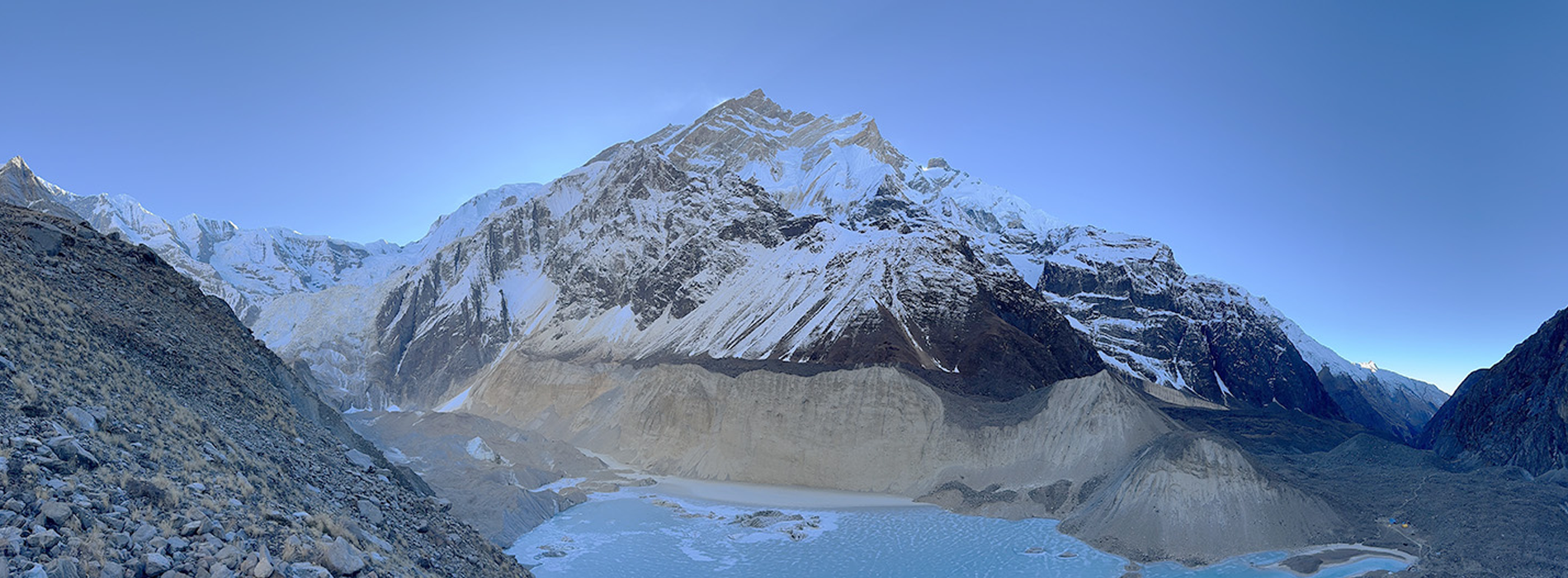
Trip Fact
There are some important facts about the Annapurna North Base Camp Trek
-
Max Altitude 4,190m
-
Difficulty Moderate
-
Duration 10 Days
-
Trip Profile Annapurna North base Camp Trek, Annapurna Region
-
Type Trekking
-
Accommodation 4/5 Star hotel in Kathmandu and Teahouse during the trek
-
Meals All meals Include(B,L,D)
Detail Overview
Nepal’s Annapurna North Base Camp trek is a once-in-a-lifetime adventure trek in Nepal. This 10-day itinerary combines scenic flights, remote camping, and cultural villages for trekkers of all levels. Highlights include flying (or taking a bus) from Kathmandu to Pokhara, visiting Tatopani’s hot springs, and crossing the historic Maurice Herzog trail through Ghale villages like Ghasa and Lete. The trek offers panoramic views of Annapurna I, Machhapuchare (Fishtail), Dhaulagiri, Nilgiri, and more, plus waterfalls and high glacial lakes (e.g. scenic Pancha Kunda) along the way. This is a true adventure trek in Nepal: from dense rhododendron forests up to bare alpine deserts, with wildlife and rare herbs. Unlike popular teahouse treks, most nights above ~3,000 m are in tents (no lodges). The final days descend via the motorable road, returning through Pokhara to Kathmandu.
- Highlights: Flight between Kathmandu and Pokhara (25 min) vs 7–8 h bus; idyllic lakeside Pokhara; Gurung and Thakali villages (Tatopani, Narchyang, Ghasa, Lete); sunrise/sunset over Annapurna peaks; unique wildlife (snow leopard, musk deer); remote camping under the stars.
- Experience: Off-the-beaten-path trekking (Maurice Herzog Trail); cultural immersion with Magar/Thakali communities; rare sights like Pancha Kunda Lake and Futfutey Waterfall. Moderate daily distances (6–7 h) through varied terrain.
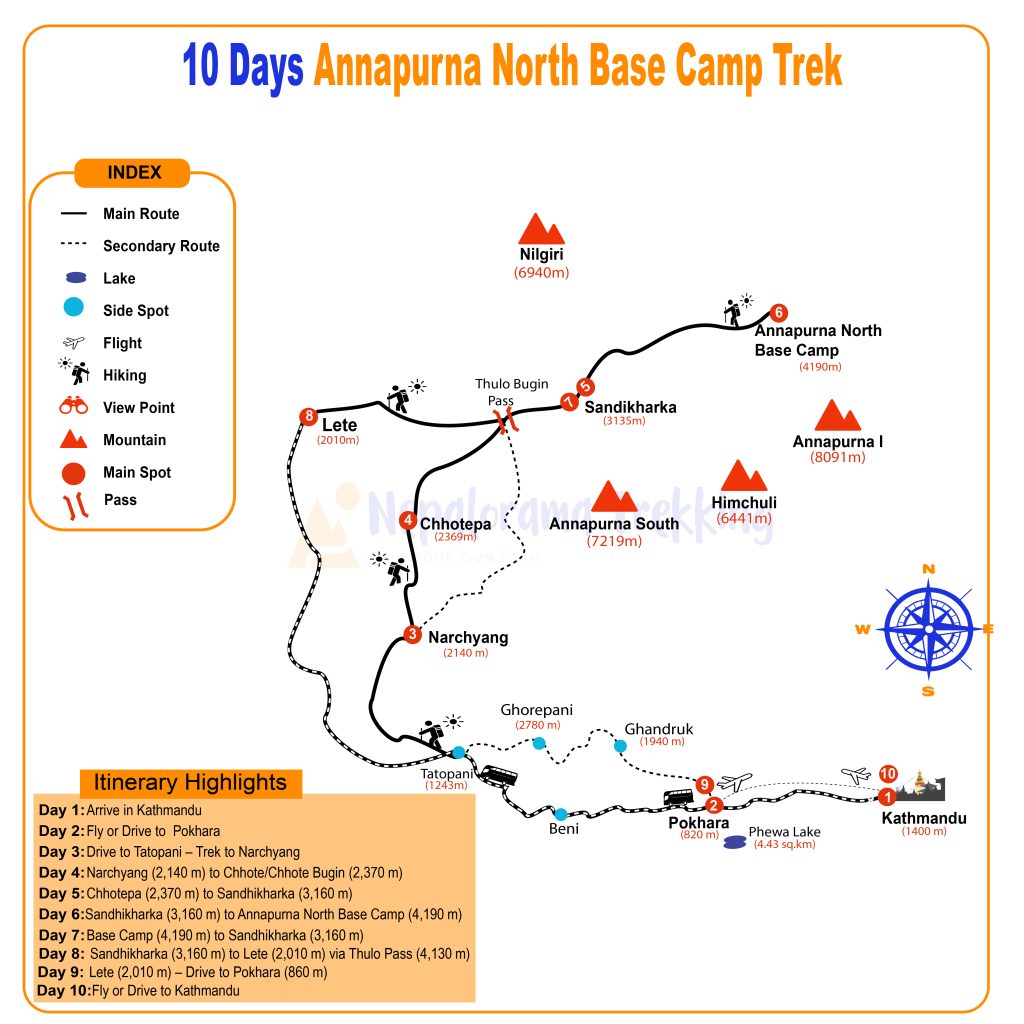
- Route Map: The North ABC trek route map follows the classic Annapurna trail north of the Annapurna Conservation Area. Key waypoints are Tatopani – Narchyang – Chhotepa – Sandhikharka – Thulo Bugin – North Base Camp – Thulo Bugin (return) – Tatopani. (See detailed maps in trekking guides.)
Cost: Camping treks are pricier due to gear and guides. For example, a local 10-day package starts ~US$950–1475/pax. Simple camping-only tours can be ~$490/pax for 2 people.
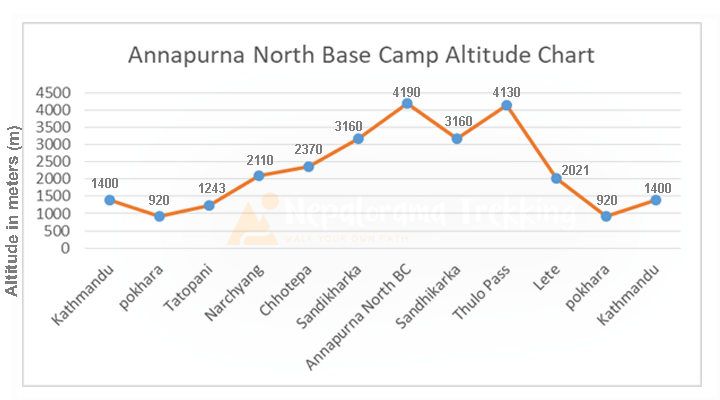
Annapurna North Base Camp Trek Altitude profile
| Location | Elevation(m/ft) |
| Kathmandu | 1,400 m (4,593 ft) |
| Pokhara | 820 m (2,690 ft) |
| Tatopani | 1,190 m (3,904 ft) |
| Narchyang | 2,140 m (7,021 ft) |
| Chhote/Chhote Bugin | 2,369 m (7,805 ft) |
| Sandhikharka | 3,165 m (10,384 ft) |
| Annapurna North Base Camp | 4,190 m (13,747 ft) |
The Annapurna North Base Camp trek offers a unique, quieter alternative to the more popular Annapurna Base Camp trek. Why it’s a great choice for trekkers:
- Less Crowded:
- Stunning Mountain Views:
- Diverse Landscapes:
- Cultural Experience:
- Adventure for All Levels:
- Annapurna Conservation Area:
- Relaxing Hot Springs:
- Unbeatable Sunrises and Sunsets:
Annapurna North Base Camp Trek Permits and Fees
To trek to Annapurna North Base Camp, you will need two main permits The required permits for the North ABC trek permit are the Annapurna Conservation Area Permit (ACAP) and the Trekking Information Management System (TIMS) Card. Below is a brief overview of the required permits and the associated costs:
| Permit | Cost (NPR) |
| Annapurna Conservation Area Permit | $15 USD (SAARC) / $25 USD (Foreginer) |
| TIMS Card | $16 USD (group trekkers) |
| Total | NPR 4,000 to NPR 6,000 |
Best Time to Trek Annapurna North Base Camp (ABC North)
The best time to trek to Annapurna North Base Camp is during Autumn Season (September to November) and Spring Seasons (March to May). These seasons offer the best weather conditions for trekking, with clear skies, mild temperatures, and breathtaking views of the mountains. During these months, you will also find lush landscapes and pleasant trekking conditions. The Autumn season is especially popular due to the clear skies and minimal rainfall, while Spring offers beautiful blooming rhododendrons and perfect trekking weather.
| Season | Best Months | Weather Conditions | Highlights |
| Autumn | September to November | Clear skies, mild temperatures, minimal rainfall | Ideal for panoramic views, dry weather, and perfect trekking conditions |
| Spring | March to May | Mild temperatures, sunny days, blooming rhododendrons | Enjoy lush landscapes, flowers, and clear skies |
| Winter | December to February | Cold, snowy, and risky with high winds at base camp | Not recommended due to harsh conditions and cold temperatures |
| Summer/Monsoon | June to August | Heavy rainfall, wet trails, and potential landslides | Avoid trekking as trails can be slippery and dangerous |
North ABC trek Culture and People
The Annapurna North Base Camp trek takes you through remote villages where you can experience the rich culture and daily life of the Himalayan people. Along the trail, you will mainly meet Gurung and Magar communities, who are known for their warm hospitality, traditional stone houses, and strong mountain lifestyle. In the higher and northern areas, you may also encounter people influenced by Tibetan culture, seen in prayer flags, chortens, and monasteries.
Local people depend on farming, animal husbandry, and trekking tourism for their livelihood. Their culture is deeply connected to nature, mountains, and Buddhist and Hindu traditions. During the North ABC trek, trekkers can enjoy local food, traditional dress, folk music, and festivals, which add cultural value to the journey.
The Annapurna North Base Camp trek culture offers an authentic Himalayan experience, making this trek not only about mountains but also about understanding the local people, traditions, and heritage of the Annapurna region.
North ABC Trek Accommodation and Food
The primary accommodation in North ABC is teahouses (locally known as guesthouses), which provide basic but comfortable facilities. They are typically small lodges run by local families along the trekking route.
Types of Accommodation During the trek
Standard Teahouses:
- Tatopani, Chhote, Sandhikharka, Lete, and Annapurna Base Camp all have basic to moderate teahouses, but the higher you go, the more basic the accommodation becomes.
- Rooms: You can get basic rooms with a bed, blanket, and pillow (bring a sleeping bag for extra warmth, especially in higher altitudes).
- Shared Toilets: Toilets are generally shared and may be outside the room, depending on the teahouse.
- Facilities: No electricity (most teahouses use solar power or generators). Hot water may be available at extra cost.
- Meals: Tea, coffee, dal bhat (lentil soup with rice), noodles, and basic snacks are commonly offered.
Luxury Teahouses: (Pokhara & Kathmandu)
- Rooms: Better quality rooms with attached bathrooms, hot water, and more comfortable bedding.
- Amenities: Some have Wi-Fi, charging stations, and warm rooms, especially in areas like Pokhara or lower altitude villages.
- Meals: Larger menu options, including Western and Nepali dishes.
Food During the North ABC trek
Food on the Annapurna North Base Camp trek is simple, nutritious, and designed to fuel you for the demanding trek. The meals typically consist of local Nepali dishes and some Western-style food at the teahouses along the trail.
- Variety: Enjoy a mix of traditional Nepali dishes (Dal Bhat, Momo, Thukpa) and Western options (pancakes, fried rice, eggs).
- High-Energy Meals: Dal Bhat (lentil soup with rice), noodles, and momos will keep you energized throughout the trek.
- Snacks: Biscuits, chocolates, granola bars, and tea/coffee are available for quick energy.
- Hydration: Stay hydrated with tea, hot chocolate, and boiled water.
- Altitude Adjustments: The menu becomes simpler as you ascend, but meals remain filling and nutritious to support your energy needs at higher elevations.
North ABC trek Outline Itinerary
| Day | Destination | Accommodation | Meals | Elevation | Duration/Distance | Activities/Highlights |
| 1 | Arrival in Kathmandu | 3-Star Hotel | Breakfast, Welcome Drinks | 1,400m | – | Arrival in Kathmandu, transfer to hotel, relax |
| 2 | Kathmandu to Pokhara | 3-Star Hotel | Breakfast | 820m | 25 min flight / 6-7 hr drive | Fly or drive to Pokhara, explore lakeside town |
| 3 | Drive to Tatopani, Trek to Narchyang | Teahouse | Breakfast, Lunch, Dinner | 2,140m | 6-7 hrs drive, 2-3 hrs walk | Visit Tatopani Hot Springs, trek to Narchyang village |
| 4 | Trek Narchyang to Chhote/Chhote Bugin | Teahouse | Breakfast, Lunch, Dinner | 2,369m | 6-7 hrs, 14 km | Trek through scenic landscapes to Chhote village |
| 5 | Trek Chhote to Sandhikharka | Teahouse | Breakfast, Lunch, Dinner | 3,165m | 6-7 hrs, 9 km | Trek through villages to Sandhikharka |
| 6 | Trek Sandhikharka to Annapurna North Base Camp | Teahouse | Breakfast, Lunch, Dinner | 4,190m | 7-8 hrs, 10 km | Reach Annapurna North Base Camp with stunning mountain views |
| 7 | Back to Sandhikharka | Teahouse | Breakfast, Lunch, Dinner | 3,165m | 6-7 hrs | Descend back to Sandhikharka |
| 8 | Sandhikharka to Lete via Thulo Pass | Teahouse | Breakfast, Lunch, Dinner | 2,010m | 7-9 hrs, 18-20 km | Trek over Thulo Pass, reach Lete |
| 9 | Drive to Pokhara | 3-Star Hotel | Breakfast, Lunch | 820m | 6-7 hrs drive | Return to Pokhara, relax or explore the town |
| 10 | Fly or Drive to Kathmandu & Celebrate | 3-Star Hotel | Breakfast, Farewell Dinner | – | Flight/Drive duration | Fly or drive back to Kathmandu, farewell dinner |
| 11 | Departure from Kathmandu | – | Breakfast | – | – | Departure from Nepal, end of the trek |
Annapurna North Base Camp Trek Detail Itinerary
For your Nepal tour, choose to follow this exact itinerary or ask us to customise your trip.
Arrive in Kathmandu
-
 Accomodation: 3 Star Hotel
 -
 Meals: Breakfast, welcome drinks
 -
 Elevation: 1400m
Flight to Pokhara
-
Accomodation: 3 Star Hotel
-
Meals: Breakfast
-
Elevation: 820 m
-
 Duration: 25 min flight or 6-7 hr drive
Drive to Tatopani and Trek to Narchyang
-
Accomodation: Teahouse
-
Meals: Breakfast, Lunch, Dinner
-
Elevation: 2140m
-
Duration: 6-7 Hrs drives and 2-3 hrs walked
Trek Narchyang to Chhote/Chhote Bugin
-
Accomodation: Teahouse
-
Meals: Breakfast, Lunch & Dinner
-
Elevation: 2369 m
-
Duration: 6-7 Hrs
-
 Distance: 14 km
Trek Chhotepa to Sandhikharka
-
Accomodation: Teahouse
-
Meals: Breakfast, Lunch & Dinner
-
Elevation: 3,165m
-
Duration: 6-7 Hrs
-
Distance: 9 km
Trek Sandhikharka to Annapurna North Base Camp
-
Accomodation: Teahouse
-
Meals: Breakfast, Lunch & Dinner
-
Elevation: 4,190m
-
Duration: 7-8 Hrs
-
Distance: 10 km
Back to Sandhikharka
-
Accomodation: Teahouse
-
Meals: Breakfast, Lunch & Dinner
-
Elevation: 3,165 m
Sandhikharka to Lete via Thulo Pass
-
Accomodation: Teahouse
-
Meals: Breakfast, Lunch & Dinner
-
Elevation: 2,010m
-
Duration: 7-9 Hrs
-
Distance: 18-20km
Drive to Pokhara
-
Accomodation: 3 Star Hotel
-
Meals: Breakfast, Lunch
-
Elevation: 820m
Fly or Drive to Kathmandu and Celebrate!
-
Accomodation: 3 Star Hotel
-
Meals: Breakfast, Farewell Dinner
Goodbye Nepal
-
Meals: Breakfast



Feedback Session:
After you complete the North Annapurna Base Camp Trek ( North ABC Trek), we will host a farewell dinner in Kathmandu to celebrate your successful journey. During the dinner, we will also present you with a trekking certificate as a memory of your adventure. We kindly request you to share your feedback about our services, including your experience with our guide and porter. Your review is very valuable to us and helps us improve our services and provide the best possible experience for future trekkers.
Annapurna North Base Camp Trek Route Map
What's Included
- Transfers from and to Kathmandu International Airport
- Tourist bus from Kathmandu to Pokhara and Pokhara to Kathmandu (optional for an extra cost: return domestic flights)
- Excellent 3* hotel shared accommodation (twin or triple share) in Pokhara and Kathmandu with breakfast (optional for an extra cost: choose to stay in a mid-range or luxury city hotel)
- Private ground transport to and from the trek
- Shared accommodation in teahouses (usually 2 people per room) during the trek
- All meals during the trek – choose a standard option from the menu at breakfast, lunch and dinner, each served with a cup of tea or coffee
- Experienced and friendly English-speaking Guide; their salary, accommodation, meals and insurance
- Porter (1 between 2 people, to carry a maximum of 12kg per trekker); their salary, accommodation, meals and insurance (optional for an extra cost: 1 porter per person, maximum 24kg load)
- Trekking permits
- Celebration meal in a great local restaurant (with a cup of tea or coffee)
- All government taxes
- Trek route map and completion certificate
- First aid medical kit with an oximeter.
- Fresh/dry fruits along the trek
What's not Included
- Additional tea, coffee, all mineral water (we recommend water purification tablets), and bar bills (coke, juice, beer, etc.)
- International airfare
- Travel insurance
- Nepal entry visa fees
- Tips for guides and porters
- Sightseeing costs (transport, attraction entry fees and cultural tour guide)
- Extra night accommodations due to changes in itinerary.
- Credit card fees and bank charges (no charge if cash paid in a major currency)
Annapurna North Base Camp Trek Gallery
Annapurna North Base Camp Trek FAQs
How difficult is the Annapurna North Base Camp trek, and can beginners do it with training?
The Annapurna North Base Camp trek is considered a moderate trek with a remote wilderness experience. You’ll be hiking for 5 to 7 hours daily over rugged terrain with gradual elevation gain. While there’s no technical climbing involved, the lack of established tea houses above ~3,000 meters, cold nighttime temperatures, and tent camping add to the physical challenge.
However, beginners who prepare with regular cardio, hill training, and strength exercises can complete this trek. Many first-time trekkers have successfully reached North Base Camp with a good guide, proper gear, and pacing.
What permits are required for the Annapurna North Base Camp trek, and where do I get them?
To legally trek to Annapurna North Base Camp, you need two permits:
Annapurna Conservation Area Permit (ACAP) – approximately USD 25
TIMS Card (Trekkers’ Information Management System) – approximately USD 15–20
You can obtain both permits from the Nepal Tourism Board office in Kathmandu or Pokhara. These fees contribute to trail maintenance, conservation efforts, and supporting local communities. Ensure your permits are in hand before departing Pokhara or Beni.
What kind of accommodation can I expect during the Annapurna North Base Camp trek? Are tea houses available?
Accommodation along the Annapurna North Base Camp route is extremely limited.
In lower villages like Narchyang or Lete, you might find basic guesthouses.
Beyond ~3,000 meters, there are no tea houses, and you’ll need to camp in tents.
This trek is more remote than the popular Annapurna Base Camp route. Therefore, trekkers typically carry group camping gear, including tents, sleeping bags, and cooking supplies. A local guide and porter service often handle logistics and equipment transport.
What gear should I bring for the Annapurna North Base Camp trek?
You’ll need both regular trekking gear and specialized equipment for high-altitude camping. Here’s a checklist:
Layered clothing system (thermal base layer, fleece jacket, down jacket, waterproof shell)
Warm sleeping bag (rated to at least –10°C)
Tent, sleeping mat, and camping stove (usually carried by your guide/porter)
Sturdy hiking boots, gloves, hat, and trekking poles
Water purification tablets, sunscreen, sunglasses, and a power bank
Snacks and personal medical kit, including altitude sickness tablets (e.g., Diamox)
Camping gear must be of good quality, as temperatures at night can fall below freezing.
Is altitude sickness a concern on this trek, and how can I prevent it?
Yes, altitude sickness is a concern since the highest overnight elevation is 4,190 meters at the North Base Camp.
To minimize your risk:
Ascend gradually, giving your body time to acclimatize
Drink plenty of water and avoid alcohol or smoking
Watch for symptoms: headache, dizziness, nausea, shortness of breath
Trekkers are advised to carry Diamox (consult your doctor) and descend immediately if symptoms worsen. Your guide may also carry oxygen or a portable altitude chamber for emergencies.
Is travel insurance necessary for the Annapurna North Base Camp trek?
Yes, comprehensive travel insurance is mandatory, especially since the trail is remote and lacks medical infrastructure.
Your insurance should cover:
High-altitude trekking (up to 5,000 meters)
Emergency helicopter evacuation
Medical expenses and trip cancellation
Some reputable insurance providers include World Nomads, IMG Global, and Global Rescue. Always read the fine print and keep a digital and printed copy of your policy.
When is the best time to trek to North ABC Trek?
The ideal seasons for the Annapurna North Base Camp Trek are:
Autumn (September to November): Clear skies, stable weather, panoramic mountain views
Spring (March to May): Mild temperatures, blooming rhododendrons, great visibility
Avoid the monsoon season (July to August) due to slippery trails and landslides. Winter (December to February) brings heavy snowfall and extremely cold temperatures, making camping difficult without advanced gear.
What is the route to North Annapurna Base Camp like? Is there a map or a marked trail?
The trek follows the historic Maurice Herzog Trail, named after the first climber to summit Annapurna I in 1950.
Key route highlights:
Start from Tatopani or Narchyang, continue through Ghasa, Lete, and climb to Thulo Bugin Pass
Reach the Annapurna North Base Camp (4,190 m)
There are no official signposts beyond Lete, so a knowledgeable guide is crucial for navigation. Offline GPS maps and apps like Gaia or Maps.me can be helpful, but not sufficient on their own.
What is the cost of the Annapurna North Base Camp trek for 10 days?
Trek cost depends on the level of service and group size:
Trek Style
Estimated Cost (PerPerson)
Fully Guided Camping Trek
USD 950 – 1,475
Budget Camping Trek (Group of 2+)
USD 490 – 700
Inclusions usually cover:
Permits (ACAP + TIMS)
Kathmandu–Pokhara transport (flight or bus)
Meals, camping equipment, guide & porter
Accommodation in Kathmandu and Pokhara
Exclusions: Personal gear, insurance, snacks, tips, and emergency evacuation (unless included in your insurance).
Should I hire a guide and porter for the Annapurna North Base Camp trek?
Yes. Hiring a local guide and porter is highly recommended for this route. The trail is remote, sparsely marked, and includes rugged wilderness areas where self-navigation can be risky.
A guide helps with:
Navigation
Altitude management
Communication with locals
Setting up camp and cooking
Porters help carry heavy equipment and lighten your load so you can trek comfortably.
Why should I choose the North Annapurna Base Camp ( North ABC trek )?
The North Annapurna Base Camp trek is great for trekkers who want a quiet and adventurous Himalayan experience. Unlike the popular south route, the north route is less crowded, giving you peace and solitude.
The trek offers amazing views of Annapurna I, Nilgiri, Tilicho Peak, and the Dhaulagiri range. You will pass through forests, terraced villages, high alpine meadows, and glacial areas. Along the way, you can visit Magar and Gurung villages and experience local culture far from tourist crowds.
This trek is also challenging but rewarding. It passes high mountain passes, rocky paths, and glacial streams, making it ideal for adventure lovers who want to reach a remote and rarely visited base camp.
Overall, the trek is a perfect mix of nature, culture, and Himalayan views, offering a unique and unforgettable experience in Nepal.
Association


