

Trip Fact
There are some important facts about Upper Mustang Trek
-
Max Altitude 4230 m
-
Difficulty Moderate
-
Duration 15 days
-
Trip Profile Upper Mustang Trek, Annapurna Region
-
Type Trekking
-
Accommodation 3 star hotel in Kathmandu, Pokhara and Teahouse during the trek
-
Meal Plan All meals included (B/L/D)
Details Overview of Upper Mustang Trek
Upper Mustang Trek is a special journey into Nepal’s most hidden and peaceful places. It was the Kingdom of Lo and stayed closed to foreign visitors until 1992. Therefore, the inhabitants were able to preserve their traditional Tibetan ways and traditions. Upper Mustang is Located the mighty Himalayas of Annapurna and Dhaulagiri Himalaya, which shields the area from precipitation resulting in dry land with multi-colored mountains, cliffs, and deep valleys. The culture and appearance of the area is Tibetan stronger than other parts of Nepal.
The Upper Mustang Trek, lasting 11-12 days on foot, takes place amidst the formidable Annapurna and Dhaulagiri Himalayas, providing an arid landscape marked by vivid mountains, cliffs, and deep valleys due to limited precipitation. The region’s distinct Tibetan influence sets it apart from other areas of Nepal. Commencing from Kagbeni, a quaint village serving as the entry point to Upper Mustang, the journey follows historic trade paths to the fortified capital of the former kingdom, Lo-Manthang. Along the route, travelers encounter ancient caves, villages, and Buddhist monasteries like Ghar Gompa and Naggyl Gompa. In Lo-Manthang, visitors can explore the king’s palace and the accessible Amchi Museum, delving into the realm of traditional Tibetan medicine. Tinkhar, the final significant settlement positioned in the region’s northwest corner, also awaits exploration.
During this Upper Mustang Trek, you can see panoramic views of the high mountains such as Annapurna, Dhaulagiri, Nilgiri, and Manaslu. With the its incredible landscapes, strong spiritual culture, and tranquil settlements, the trek must be one of the least traveled treks in Nepal. Since Upper Mustang is a conservation area, tourists require special permission to visit. This help preserve its natural beauty and traditional way of life. The Upper Mustang trek is for adventurers interested in authentic cultural experiences apart from the busy trekking trails and serene nature.
Upper Mustang Trek Difficulty
The Upper Mustang Trek is not hard, but it is not easy either. You do not need to climb much or walk on very steep paths. But the trek is high-altitude and walking days are long, so it will still be tiring. The highest point is Lo-Manthang, which is around 3,800 meters (12,467 feet) above sea level. At this height, altitude sickness can happen to some individuals, with its symptoms being headaches or feeling very tired. The trail is dry and dusty, too, and the sun is hot, and this makes the trek more challenging, especially for beginners. However, the trails are not crowded and walking is normally slow. Average-fitness individuals, therefore, can complete the trek in most instances.
Upper Mustang Trek Preparation
If you’re going to the Upper Mustang Trek, it’s a good idea to get your body and mind ready too. Try to begin with some regular walking, simple hiking, or even jogging some weeks before you go. This will build up your stamina and toughen your legs for the long walking days. Cycling or running are great ways to get your breathing and cardiovascular system working too. Since the hike gets you to such high altitudes, it is well worth being aware of altitude sickness. The best that you can do is to walk at a slow pace, drink plenty of water, and rest whenever your body needs it. Many hikers also take medication like Diamox after a doctor’s consultation, just in case they start feeling sick due to the altitude. It is extremely important to pack the right gear. Don’t forget the warm clothes, a decent jacket, and sturdy hiking boots. Don’t forget your sunglasses, cap, sunscreen, and a refillable water bottle. A daypack and trekking poles can make your hike easier. Make sure your travel insurance includes high-altitude trekking as well. You will have to get a couple of special permits to go to Upper Mustang, and this can be easily arranged by the company.
Upper mustang trek permits
Required permits Include:
- Restricted Area Permit (RAP): $ 500 per person for a 10-day trek (valid for 10 days), An additional $ 50 per person for each extra day beyond the 10-day permit
- Annapurna Conservation Area Project (ACAP) Permit: NPR 3,000 (Approx. US$ 25) per person.(For the Upper Mustang Trek, required min 2 pax permits due to government regulations.)
- Tim’s (Trekkers’ Information Management System) Card : NPR 2,000 (Approx. US$ 17) per person
For comprehensive and up-to-date information, please visit the official website of the Department of Immigration Nepal.
Document for booking Upper mustang trek
- Passport: A copy of valid passport with at least 6 months of validity remaining
- Flight Ticket: A Copy of your Flight Ticket
- Passport-Sized Photos: 2 passport-sized photos
- Travel Insurance: A copy of Travel and trekking insurance
- A copy of your visa is required to obtain the permits
Upper mustang Altitude Profile

| Location | Elevation (m/ft) |
| Jomsom | 2,720 m (8,924 ft) |
| Kagbeni | 2,800 m (9,186 ft) |
| Chusang | 2,980 m (9777 ft) |
| Samar | 3,620 m (11,877 ft) |
| Syangbochen | 3,800 m (12,467 ft) |
| Ghiling | 3,806 m (12487 ft) |
| Ghami | 3,510 m (11,516 ft) |
| Dhakmar | 3,810 m (12,500 ft) |
| Charang | 3,560 m (11,680 ft) |
| Lo Manthang | 3,840 m (12,598 ft) |
| Chogo La | 4,323 m (14,183 ft) |
| Ghar Gumba | 4,323 m (14,183 ft) |
People and culture in Upper mustang
overview of the people and culture in Upper Mustang:
- Ethnic Group: The people of the upper mustang belong to the loba ethnic group, which comes from Tibet. they practice Tibetan Buddhism and speak Lo, Tibetan dialect; however, they also know Nepali. Their culture is dominated by Tibetan traditions, and they are strongly attached to Tibetan spiritual leaders, including the Dalai Lama.
- Religion: The main religion in Upper Mustang is Tibetan Buddhism. They pray, do rituals, and visit monasteries as part of daily life. Lo Manthang Monastery and Ghar Gumba are important religious places where prayer flag and carved stones can be seen. In there, some people also follow the old religion.
- Lifestyle and Traditions: The people of Upper Mustang grow barley, buckwheat, and potatoes in terraces. Yaks and goats yield milk, meat, wool, and fuel. They trade with Tibet, exchanging grain, salt, and wool for spices and medicine.
- Language: Lo, a Tibetan dialect, is the main language of the Mustang People; Nepali is also for communication outside the region.
- Hospitality and Interaction with Locals: These people are very hospitable and often invite trekkers for butter tea and Tsampa. They are friendly , especially to those who respect their culture and traditions.
- Clothing: People ware long robes which is made from wool or yak. Which is wear both men and women. They also ware traditional hats and silver jewelry during ceremonies and festivals.
The best time of the Upper Mustang trek
| Season | Weather | Best for |
| Spring (March to May) | Mild temperatures, clear skies, blooming flowers | Trekking, exploring, and pleasant weather |
| Summer (June to August) | Warm days, monsoon rains, and some areas may be muddy | Not ideal due to rain and wet conditions |
| Autumn (September to November) | Clear skies, dry weather, cool nights | Ideal for trekking, clear views, best season |
| Winter (December to February) | Cold, snowy, freezing temperatures, especially at high altitudes | Not ideal for trekking due to harsh conditions |
Why is trekking in Upper Mustang a better choice than traveling by jeep?
Trekking in Upper Mustang is better than jeep travel since it offers a more distinctive and real experience. When you trek, you go at a slow pace and enjoy the beautiful mountains, traditional villages, and nature. You can meet local residents, enjoy accommodation in tea houses, and observe their culture. Trekking also benefits locals since it offers jobs for guides, porters, and small shops. Jeep travel is faster, but it misses a majority of the locations that could only be reached on foot. Jeeps are tough going in many areas with rough roads. Trekking is also better for large nature as it generates less pollution, dust, and noise. For adventure and learning about the way of life of locals, trekking is perfect.
Kaligandagi and Fossil Stone Saligram:
Kaligandagi is come formed named after Goddess Kali and nicknamed “The Holy River,”Kaligandagi is the major river of Nepal. The river has its origin in the Mustang area and flows through the deep valleys and chada walls, which have built the Kaligandaki River, one of the deepest rivers in the world. The river flows between the heart of the Dhaulagiri and the grain iceberg, whose exquisite view and operations of works of the key water resources to the region. It is extremely crucial within the surrounding environment and supports agriculture, wildlife, and settlements. The Kaligandaki River is also deeply crucial from religious and spiritual view-points, mainly to Hindu chariots. It is named Kaligandki after the goddess Kali, and pilgrims throng this river in search of the Shaligram — Black-colored fossil stones, which are the signs of Lord Vishnu. These sacred stones are found only in the Kaligandki River and are considered very important in Hindu religious worship. Due to religious importance and natural beauty, the Kaligandki River is both a religious pilgrimage and a natural marvel in Nepal.
Foods on Upper Mustang trek
Foods on the Upper Mustang trek, Which is categorized by breakfast, lunch, and dinner. All of these meals are usually served at tea houses and lodges along the trekking route.
Breakfast
Breakfast on the Upper Mustang trek is warm and filling. You may be served Tibetan bread or chapati with jam, honey, or peanut butter. Porridge is standard, plain or with apple or dried fruit. You may also be served pancakes – plain, apple, or chocolate. Eggs are available in a variety of forms like boiled, scrambled, fried, or omelets .A local Tsampa (roasted barley flour) dish is also eaten. For drinks, one can have Tibetan butter tea, milk tea, black tea, or coffee.
Lunch
Lunch in the Upper Mustang Trek, Lunch is usually warm and filling to give energy for trekking. Some of the Popular meals like Dal Bhat – A common Nepali meal with rice, lentil soup, and vegetables. Noodle soup – Hot soup with noodles, mixed with vegetables or meat. Fried noodles or fried rice – Cooked with vegetables, sometimes with eggs or meat. Momos – Steamed or fried dumplings filled with vegetables or meat. Thukpa – A Tibetan-style noodle soup, often served hot with vegetables. Vegetable curry – Spicy vegetables served with rice or flatbread (roti).
These meals are healthy, tasty, and perfect for trekkers.
Dinner
Dinner for Upper Mustang trek is warm and hearty as It looks like Lunch, like Dal Bhat , rice, vegetables, and lentil soup, is a standard meal ,and count your many refills you get of it. Thukpa, pronounced like touk-paw, a Tibetan variety of noodle soup, is quite a popular meal. Trekkers also tend to eat momos, steamed or fried dumplings filled with vegetables or meat. Additionally, there are basic potato offerings in whatever way you prefer, boiled, fried, or with curry. Some of the more popular restaurants even serve pasta or macaroni. Having a hot bowl of soup, such as vegetable or garlic soup, is good to warm up and is great for altitude.
Equipment checklist for Upper Mustang trek
MUST haves! These are the things you MUST pack:
- Backpack, and day pack with rain cover so you can keep essentials on hand.
- Hiking boots (wear them several times before the trek to break them in).
- Down jacket (ideally with a hood) – you can hire a down jacket in Nepal but the quality can vary. That’s why we recommend that you either bring your own or buy one when you arrive in Nepal.
- Rain jacket.
- Sleeping bag (approximately 0˚C to 15˚C in spring and autumn; -10°C to 5°C in winter); many of the teahouses supply a blanket but you don’t want to risk being cold at night. It’s possible to hire a good quality sleeping bag in Nepal for around $3-4 per day. Note that if you plan to hire a sleeping bag, you may want to bring your own sleeping bag liner.
- Maximum of two sets of comfortable hiking clothes (only one for shorter treks) including very warm layers. You might feel like you’ll want fresh, clean clothes every couple of days. But once you start trekking, you’ll realise it’s just not important as your clean clothes will soil within minutes!
- Warm hat, scarf, and gloves.
- Thermal leggings or long underwea
- Raincoat
- Camera.
- Sunscreen and sunglasses – all year round.
- Beeswax lip balm (if you usually use lip balm).
- Hand sanitiser.
- Toilet roll.
- Head torch.
- Ear plugs – some teahouses have very thin walls!
- Lightweight/quick dry microfibre towel.
- Reusable drinking bottle and water purification tablets – plastic bottles destroy nature.
- First aid kit.
- Biodegradable nappy bags – take a handful for your own rubbish. It’s difficult to dispose of rubbish when you’re trekking and you don’t want to leave it behind.
SHOULD haves! These are the things you SHOULD pack:
- Trekking poles – again it’s possible to hire these, but it’s actually cheaper to buy your own when you arrive in Nepal. Then you’ll have them for next time!
- Spare light/comfortable shoes to wear in the evenings.
- One set of comfortable, warm clothes for the evenings/sleeping – fleece or merino is great!
- Secure padlock for your room, sometimes teahouse rooms don’t have locks on the doors.
- Biodegradable personal hygiene wipes – the very best way to stay hygienic without facing icy cold showers!
- Minimum toiletries (you’ll use wipes more often than washing). And trust us, you won’t need any makeup!
- Sweet snacks or energy gels to give you a boost when you need it most!
NICE to haves! These are the things that are NICE to have but not essential:
- A book/e-reader/notebook and pen/pack of cards to entertain you in the evenings.
- Binoculars – you won’t believe the beauty of the Himalayan peaks up close!
- Compeed Anti Blister Stick – use this every morning to help prevent blisters.
- Hand and Foot Warmers – when yours hands or feet just won’t warm up, these are perfect to take off the chill! Available in most sports/outdoor recreation shops.
- Berocca (or similar effervescent vitamin drink) – I put one in my bottle of water daily. It tastes great and boosts my immune system at the same time.
- Power bank if you prefer to keep your phone and any other electronic devices charged. You will have an opportunity to charge devices in most teahouses for an extra cost.
Trekking in Nepal is not a fashion parade! So, only bring what you need and enjoy being at one with nature! Even if you don’t usually leave the house without make-up on, you’ll quickly learn to love it!
Feedback Session:
After you complete the Upper Mustang trek, we have a farewell dinner in Kathmandu to celebrate your journey. We also give you a trekking certificate as a memento of your journey at the time of dinner. We respectfully ask you to leave your feedback of our company services, including your experience with our guide and porter. Your review helps us to make changes and deliver the best service to potential trekkers.
Outline Itinerary Of Upper Mustang Trek
Day 1: Arrived in Kathmandu
Day 2: Fly/Drive to Pokhara
Day 3: Fly/Drive to Jomsom and trek to Kagbeni
Day 4: Trek to Chele from Kagbeni
Day 5: Trek to Syangbochen from Chele
Day 6: Trek to Charang from Syangbochen
Day 7: Trek to Lo Manthang from Charang
Day 8: Acclimatization Day in Lo Manthang and Drive to Korala boder Via Chhosar
Day 9 : Trek to Dhakmar via Ghar Gumba From Lo Manthang
Day 10: Trek to Samar from Dhakmar
Day 11: Trek to Chusang from Samar
Day 12: Trek to Muktinath
Day 13: Trek to Jomsom
Day 14: Fly to Pokhara
Day 15: Fly/Drive to Kathmandu
Day 16: Goodbye Nepal
Upper Mustang Trek Detailed Itinerary
For your Nepal tour, choose to follow this exact itinerary or ask us to customise your trip.
Arrive in Kathmandu
-
 Accomodation: 3 Star Hotel
 -
 Meals: Breakfast, Welcome Drinks
 -
 Elevation: 1350 m
Fly/Drive to Pokhara
-
Accomodation: 3 Star Hotel
-
Meals: Breakfast, Lunch, Dinner
-
Elevation: 930 m
-
 Duration: 25 min Fly, 6-7 hr Drive
 -
 Distance: 125 miles/ 201 km
Fly to Jomsom and trek to Kagbeni
-
Accomodation: Teahouse
-
Meals: Breakfast, Lunch, Dinner
-
Elevation: 2810 m
-
Duration: 20 min Fly, 5-6 hr Drive
-
Distance: 98 miles / 158 km
Trek to Chele from Kagbeni
-
Accomodation: Teahouse
-
Meals: Breakfast, Lunch, Dinner
-
Elevation: 3100 m
-
Duration: 5-6 hours
-
Distance: 7 miles/ 11.2 km
Trek to Syangbochen from Chele
-
Accomodation: Teahouse
-
Meals: Breakfast, Lunch, Dinner
-
Elevation: 3800 m
-
Duration: 6-7 hours
-
Distance: 8.3 miles / 13.5 km
Trek to Charang from Syangbochen
-
Accomodation: Teahouse
-
Meals: Breakfast, Lunch, Dinner
-
Elevation: 3560 m
-
Duration: 6-7 hours
-
Distance: 11.8 miles / 19 km
Trek to Lo Manthang from Charang
-
Accomodation: Teahouse
-
Meals: Breakfast, Lunch, Dinner
-
Elevation: 3840 m
-
Duration: 4-5 hours
-
Distance: 7.4 miles / 12 km
Acclimatization Day in Lo Manthang and Drive to Korala border Via Chhosar
-
Accomodation: Teahouse
-
Meals: Breakfast, Lunch, Dinner
Trek to Dhakmar via Ghar Gumba From Lo Manthang
-
Accomodation: Teahouse
-
Meals: Breakfast, Lunch, Dinner
-
Elevation: 3810 m
-
Duration: 6-7 hours
-
Distance: 8.8 miles / 14.3 km
Trek to Samar from Dhakmar
-
Accomodation: Teahouse
-
Meals: Breakfast, Lunch, Dinner
-
Elevation: 3620 m
-
Duration: 6-7 hours
-
Distance: 11.1 miles / 18 km
Trek to Chusang from Samar
-
Accomodation: Teahouse
-
Meals: Breakfast, Lunch, Dinner
-
Elevation: 2980 m
-
Duration: 4-5 hour
-
Distance: 6.8 miles / 11 km
Trek to Muktinath
-
Accomodation: Teahouse
-
Meals: Breakfast, Lunch, Dinner
-
Elevation: 3760 m
-
Duration: 7-8 hr
-
Distance: 9.7 miles 15.6 km
Trek to Jomsom
-
Accomodation: Teahouse
-
Meals: Breakfast, Lunch, Dinner
-
Elevation: 2720 m
-
Duration: 6-7 hours
-
Distance: 12.4 miles / 20km
Fly to Pokhara
-
Accomodation: 3 Star Hotel
-
Meals: Breakfast
-
Duration: 20 min Fly
Fly/Drive to Kathmandu
-
Accomodation: 3 Star Hotel
-
Meals: Breakfast
-
Duration: 5-6 hours Drive
Goodbye Nepal
-
Meals: Breakfast


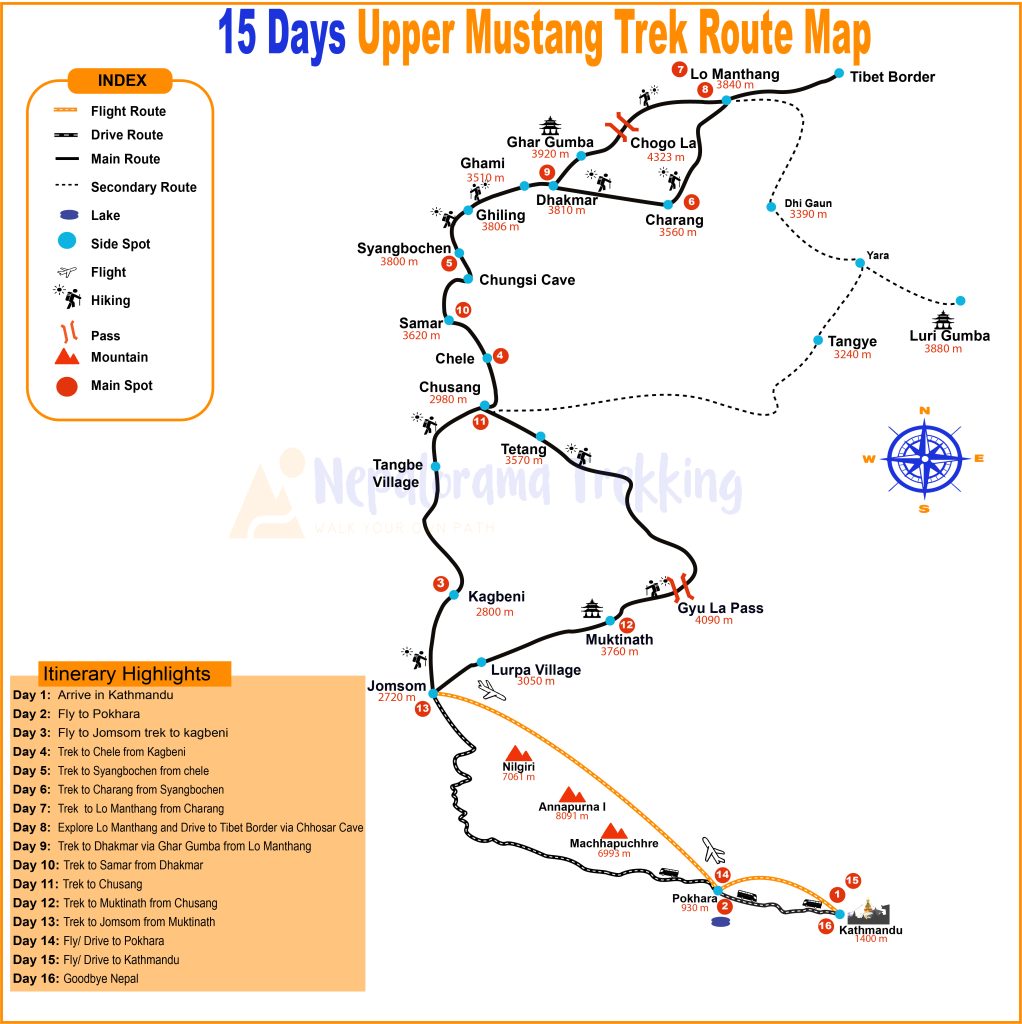
Upper mustang trek Route Map
What's Included
- All necessary ground transport by private car/Jeep airport pick up drop off services.
- Private jeeps for travel during the trek.
- Experienced and friendly English-speaking Guide with their salary, accommodation, meals and insurance.
- Porter (1 between 2 people, to carry a maximum of 12kg per trekker); their salary, accommodation, meals and insurance (optional for an extra cost: 1 porter per person, maximum 24kg load)
- Flights: Pokhara – Jomsom – Pokhara
- Transportation Kathmandu – Pokhara – Kathmandu on a tourist bus
- Annapurna Conservation Area Permit (ACAP).
- Breakfasts in Kathmandu and Pokhara.
- All meals during trek, i.e., Lunch, Breakfast, and Dinner, with each cup of tea or coffee
- All necessary government tax and service charges
- Upper Mustang Trek route map and completion certificate
- Farewell dinner in Kathmandu at the end of the trek
What's not Included
- Personal expenses: Hot showers, Wi-Fi, tips, and snacks.
- Travel and medical insurance.
- Lunch and Dinner in Kathmandu and Pokhara.
- Additional tea, coffee, all mineral water (we recommend water purification tablets), and bar bills (coke, juice, beer, etc.)
- Tips for guide and porters
- International airfare.
- Nepal entry visa fees.
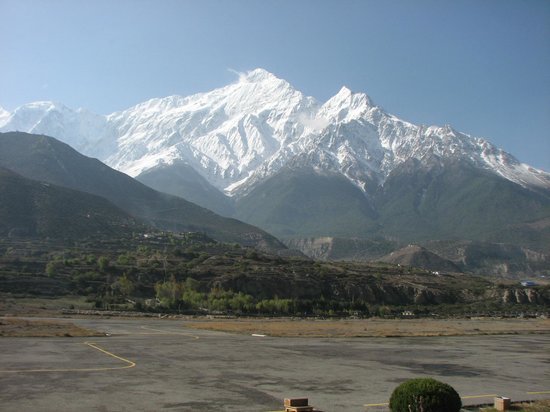
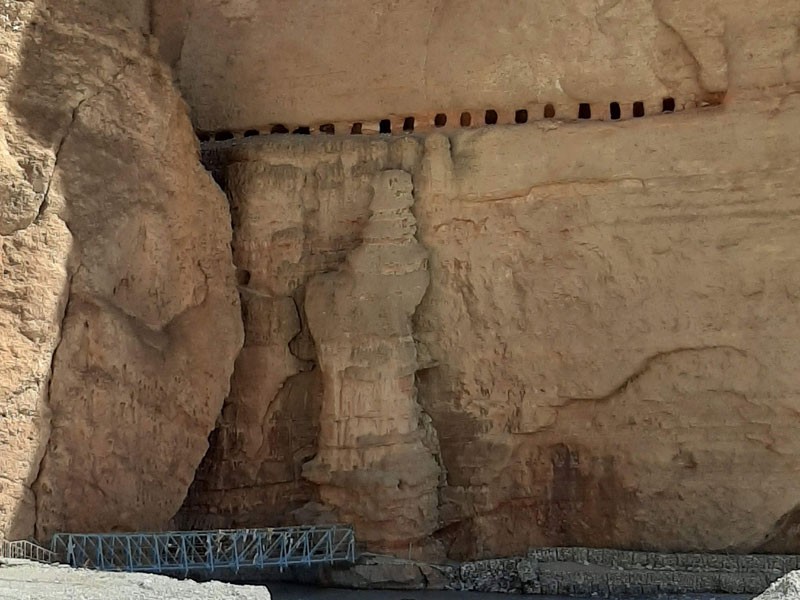
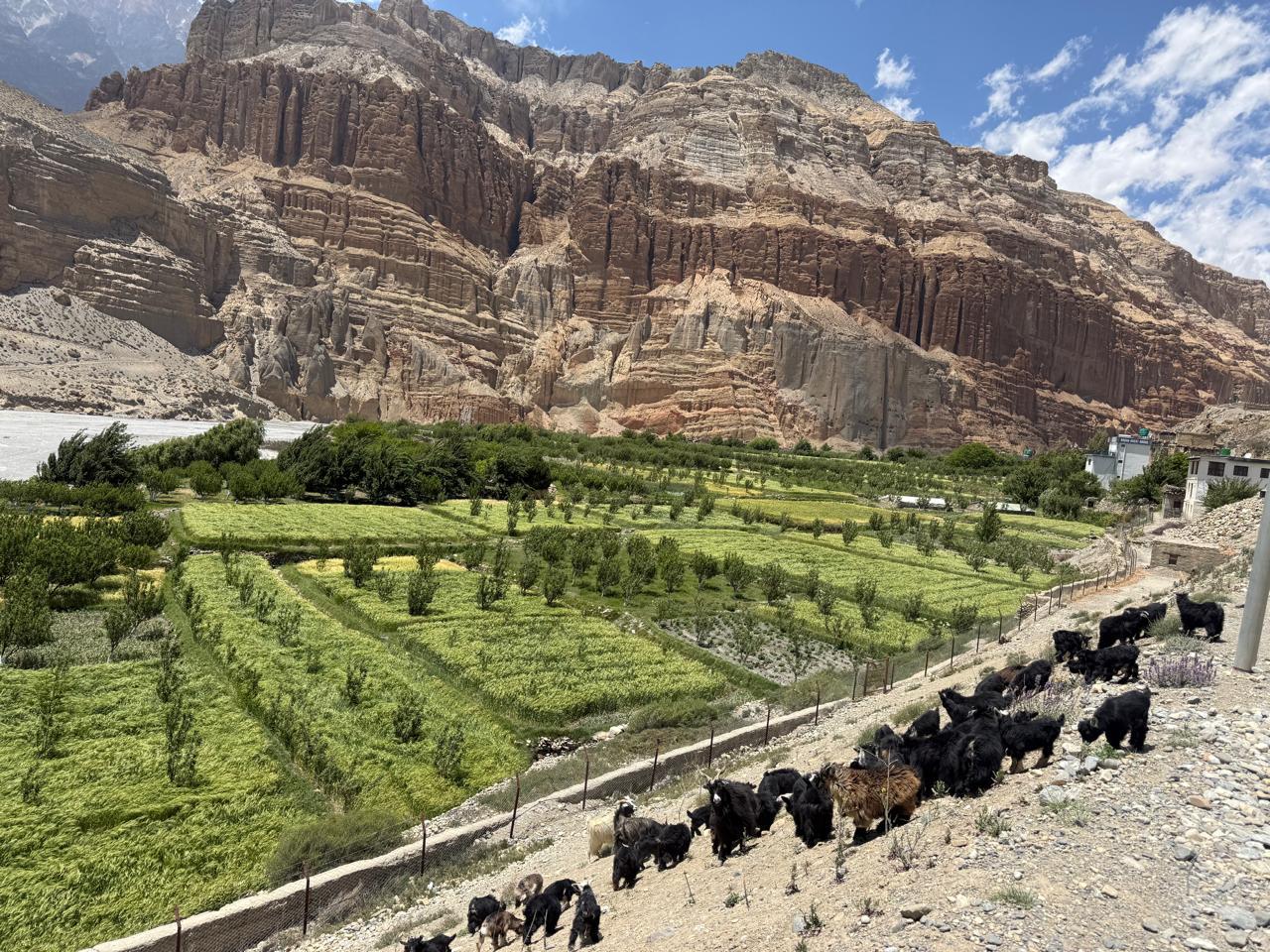
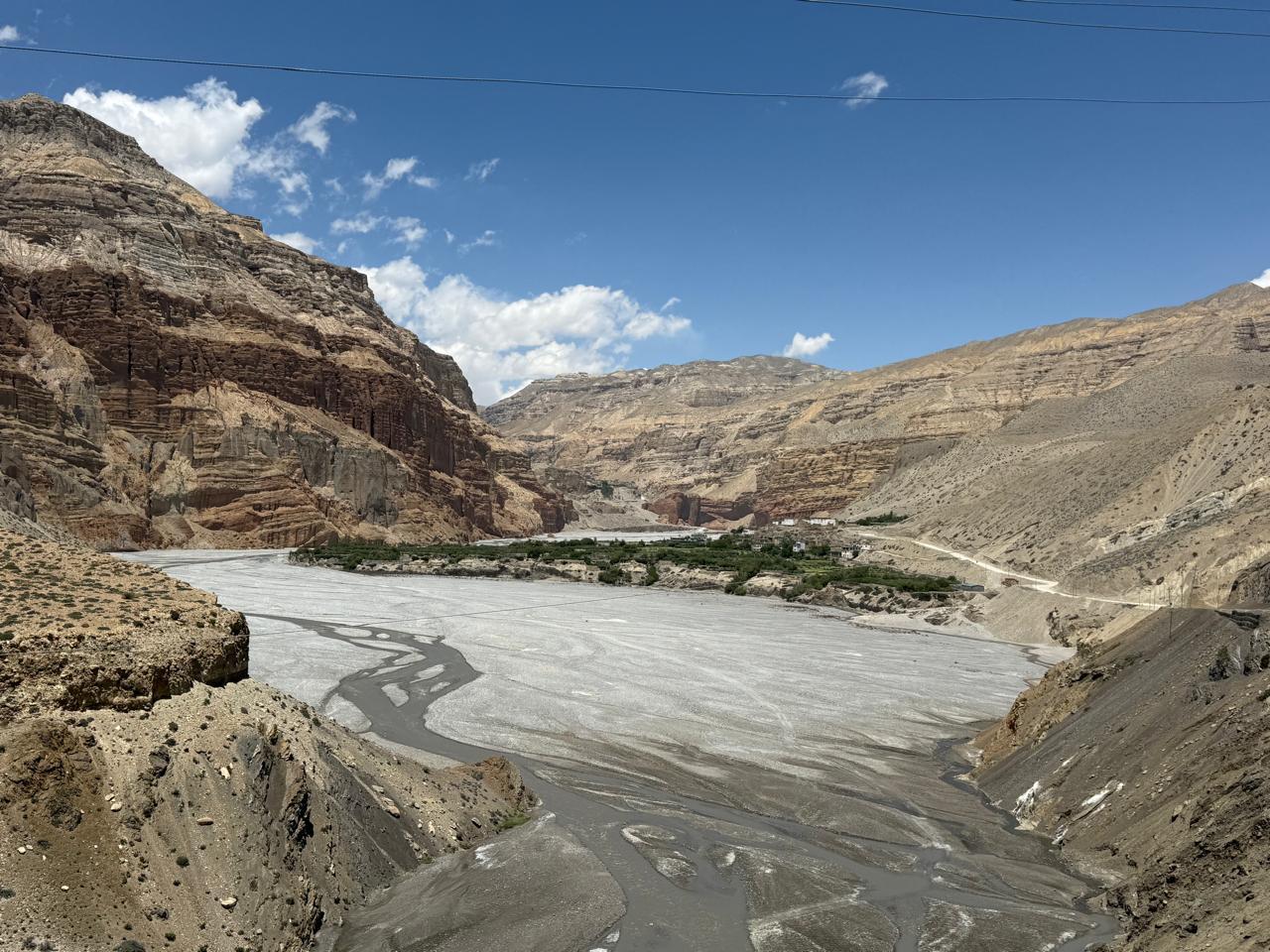
Upper Mustang trek Gallery
When is the best time for the Upper Mustang Trek?
The best time for trek is from May to November. Even the rainy season (June-August) will be dry as it is the rain shadow zone.
How long does the Upper Mustang trek take?
The upper mustang trek generally takes 12 to 16 days depending on your itinerary and also on how gradually you ascend in altitude.
Do I need permits for the Upper Mustang Trek?
Yes, you need two permissions:
Restricted Area Permit (RAP): USD 500 per person for 10 days, then USD 50 for each additional day.
Annapurna Conservation Area Permit (ACAP): NPR 3,000 (about USD 25).
Is Upper Mustang a restricted area?
Yes, Upper Mustang is a restricted area. You will need a special permit and must go with a licensed guide and at least one other person.
Why is Upper Mustang special?
Upper Mustang is called “The Last Restricted State”. Upper Mustang has ancient Tibetan culture, desert-like scenery and ancient walled cities like Lo Manthang.
Is the Upper Mustang trek suitable for children or older adults?
Yes, a physically fit older person can do this trek, but it should not be attempted by very young children as it is a long and long distance.
Can I trek solo in Upper Mustang?
No, Upper Mustang can not be trekked alone. You must have a licensed guide and at least one other person with you.
What is the highest altitude on the Upper Mustang trek?
The highest point is Lo Manthang, at about 3,840 meters (12,600 feet). Some side treks may be a little higher.
What type of accommodation is available in Upper Mustang?
Most villages have simple teahouses and lodges, where simple rooms and meals are provided. Facilities are less in remote areas.
Is altitude sickness a risk?
Yes, altitude sickness can occur above 2,500 meters. Getting enough rest and drinking enough water is very important.
What kind of food is available in Upper Mustang?
Teahouses serve Nepali food (dal bhaat), Tibetan food (thukpa, momo), and some western food (pasta, pancake).
Do I need to carry a tent or cook for Upper Mustang Trek?
No. Upper Mustang is a teahouse trek, so you don’t need to carry camping gear or cook your own food.
Where does the Upper Mustang trek start?
Trekkers usually start the Upper Mustang trekking journey from Jomsom and cross the Muktinath Temple to start the Mustang hiking and walk up to Lo-Manthan, the highest village in the area.
Is the upper Mustang a desert?
Technically, Upper Mustang is called Nepal’s semi-deserted land. It combines the Alpine meadow with the deserted landscape. The big mountains and hills block most of the rainfall, forming a desert-like ecosystem.
Do I need to do any preparation before trekking in Upper Mustang?
Yes, you will have to do some cardio exercises at least 2 weeks before the trekking. These cardio exercises include running, walking, cycling, and simple gym work. If you adopt healthy food and drinking habits along with some regular cardio exercises, it won’t be hard for you to do the trekking.
Is Wi-Fi or a mobile network available in Upper mustang?
Wi-Fi is limited and often unavailable in Upper Mustang, while mobile network coverage may be spotty and unreliable.
What are the most common health issues on this trek?
The most common health issues on treks include altitude sickness, dehydration, fatigue, hypothermia, and blisters.
Association


