
Trip Fact
There are some important facts about Mardi Himal Base Camp Trek
-
Max Altitude 4,500m/14764ft
-
Difficulty Moderate
-
Duration 5 days walking
-
Trip Profile Mardi Himal, Annapurna Region
-
Type Trekking
-
Accommodation 3 star hotel in Kathmandu, Pokhara and Teahouse during the trek
-
Meal Plan All meals included (B/L/D)
Details Overview of Mardi Himal Trek
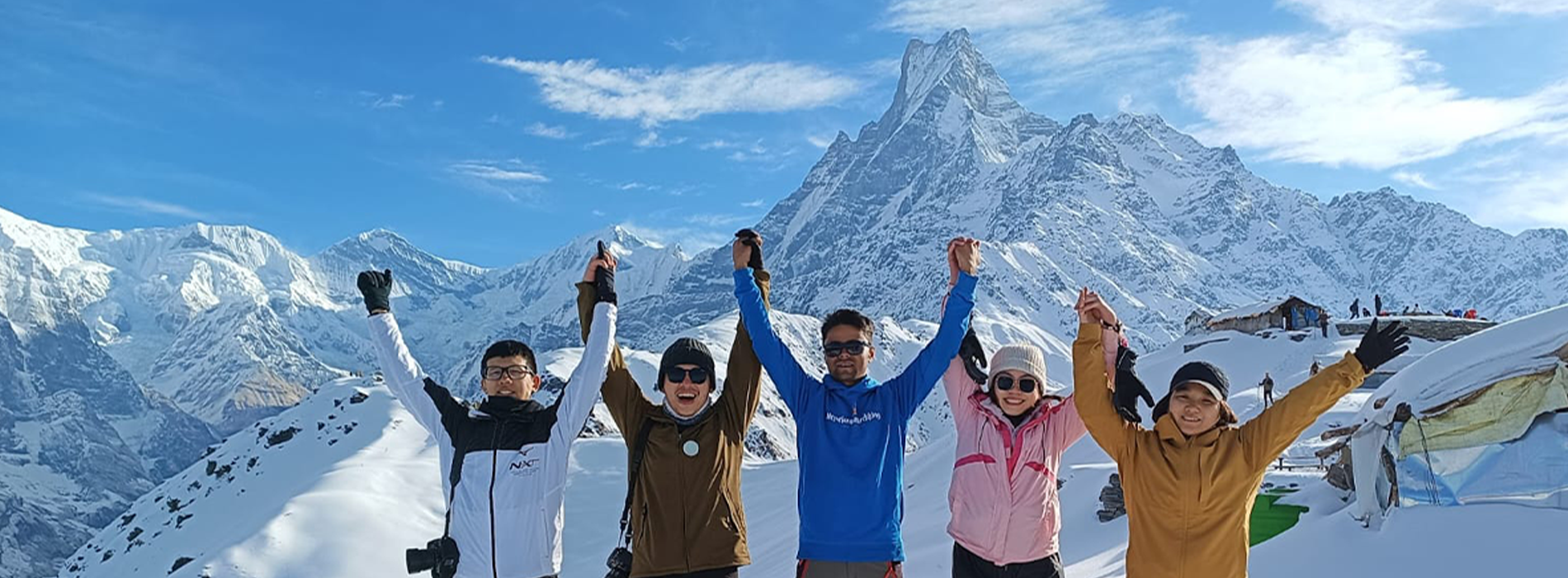
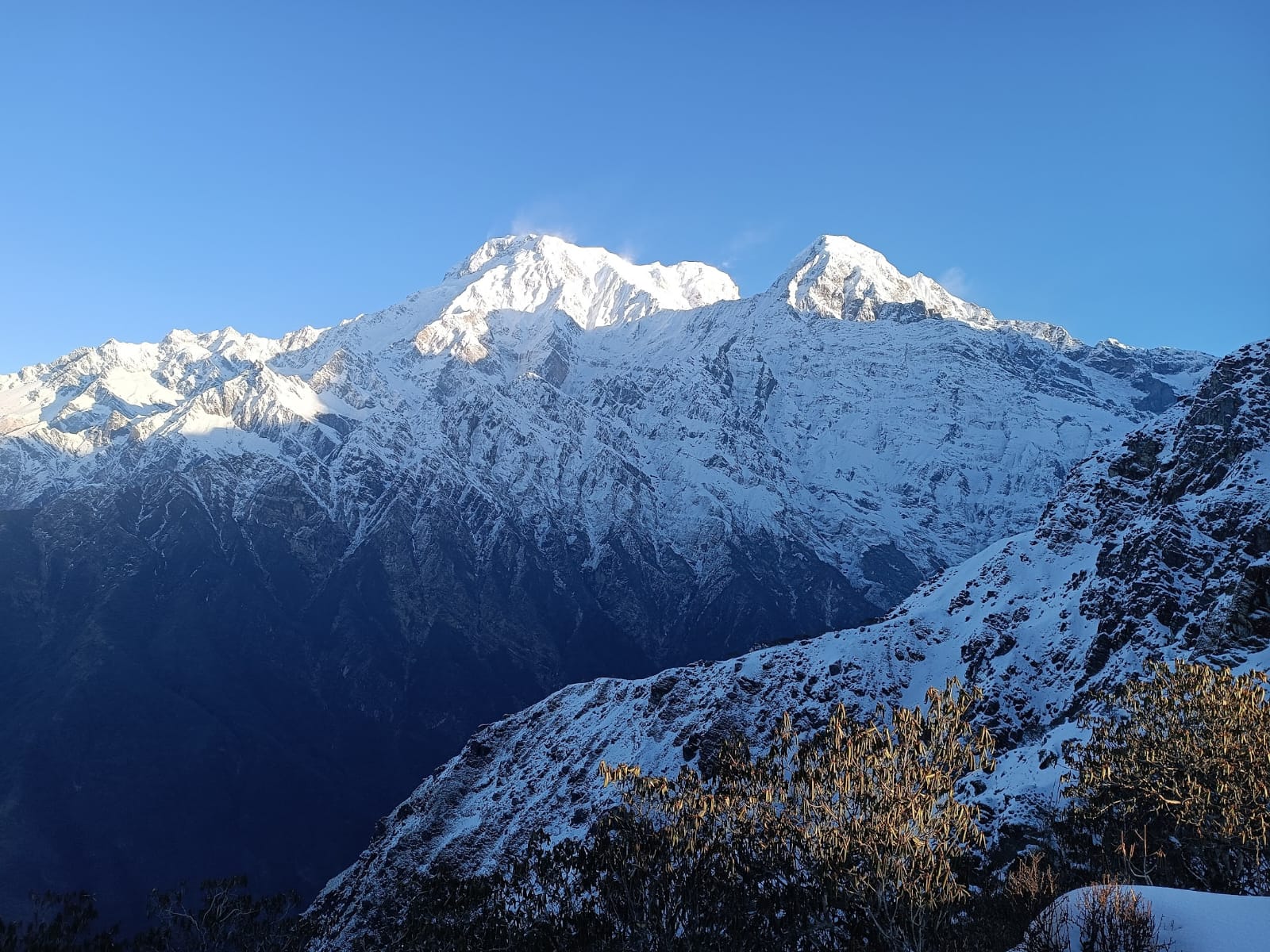
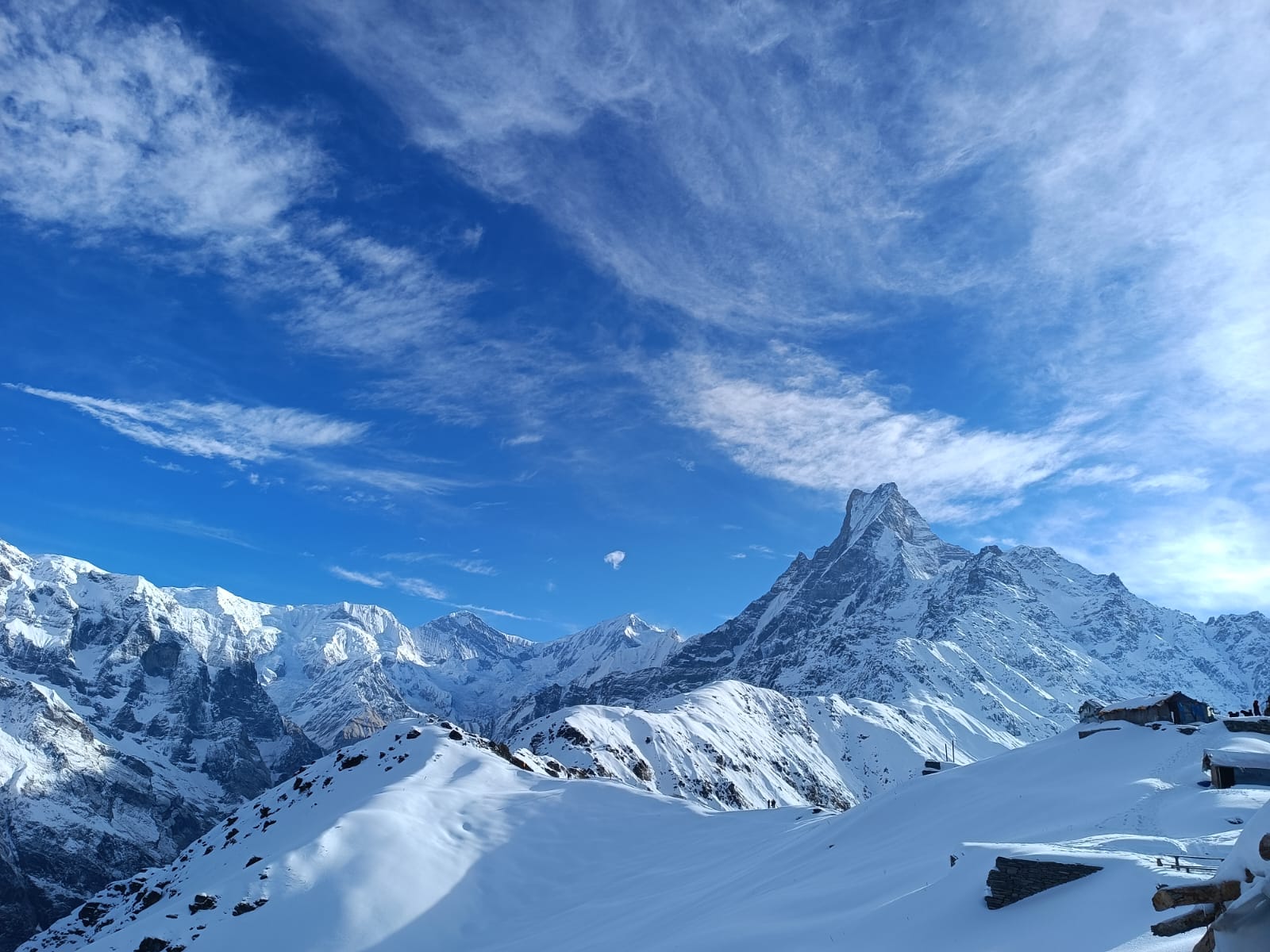
We can imagine how you feel as you stand in front of the Himalayas – Machhapuchhre or Fishtail, Annapurna South, Hiunchuli, and the spectacular Mardi Himal (5,587 m) – and be so amazed at the breathtaking views. The Mardi Himal Base Camp short trek gives you just that: a 4 to 7-day walking trail that starts from Pokhara at about 820 m and climbs gently to enter the Annapurna Sanctuary. This little-known 4 to 7-day trek was first made an official hiking trail in 2012, but it has all the familiar sights and sounds of any regular trek. Once up for some fresh air, you’ll walk up on clear days past the clouds and into stunning sunrise and sunset views of the snowy Annapurna I (8,091 m), sacred Machhapuchhre (6,997 m), Annapurna South (7,219 m), and Gangapurna. The adventure only gets bigger when it reaches its modest peak altitude of around 4,250 m at Base Camp, but it’s still breathtaking. Those few days we spent there will be all about sitting on the deck, all chatting about the stunning scenery, and all the faces that it will lead to.
Trail History & Background
The path is recent: before 2012, only a few shepherds and explorers knew about it. (Did you know? Mardi Himal’s peak was first summited in 1961 by Basil Goodfellow.) In 2012, the tourism board and local guides officially opened the path for trekkers. Lodges and teahouses sprang up at Forest Camp, Low Camp, High Camp, and the viewpoint, turning sharp tent camping with warm hearty dal-bhat dinners into several nights spent in simple beds. In the words of one guide, the Mardi himal trek is now _“short, affordable, and beginner-friendly.”_ It serves well as an alternative for people who are trekking in the Annapurna region while still providing a feeling of retreat into pristine nature.
Mardi Himal Trek Difficulty & Preparation
Mardi Himal Trek is a moderate trek. It is suitable for beginners who are at a basic fitness level and for experienced trekkers, too. The trail goes up to 4,500 meters at Mardi Himal Base Camp. Some people get altitude sickness at this elevation due to the high altitude – everyone’s body copes differently at altitude. The trail is well defined between the starting point to Low Camp, although the path becomes steep and rocky after Low Camp and goes to High Camp. The weather also can change quickly, the higher you get, which can add another difficult element. To prepare for the trek, doing regular walking, jogging, and climbing stairs regularly before the trek is helpful in building strength and stamina. You should also prepare mentally, as you will be walking for 6-7 hours a day. Pack warm clothes (layers), sturdy hiking boots, good sleeping bag, and personal items (first-aid kit, water-purifying tablets, and snacks). In addition, it is a good idea to rest for a day or two in Pokhara or another lower area to allow yourself to acclimatize to the altitude. Finally, it is worth your while to organize travel insurance that has high-altitude trekking options.
Scenic & Cultural Highlights
Mardi Himal Trek is not just a walk, but a journey through some of Nepal’s most beautiful landscapes and truly unique cultural communities. Here are things to note about this journey
- Stunning Mountain Views
More views come with elevation gain, and you can see more from high camp (Badal Danda), the viewpoint of Badal Danda (Viewpoint), and other gondola passes such as Fishtail (Machhapuchhre), Annapurna South, Hiunchuli, Mardi Himal, etc.
Sunrises here are magical ( golden light for the mountains ), and in the evenings, the hills below are often lit up with soft mist and warm colours.
- Lush Forests and Wildflowers
In the lower valleys, the route descends into dense forests of oak and rhododendron trees – if you trek in spring (March–April), the flowers bloom with vibrant pinks and reds.
There will be streams such as the Modi and Lwan, and waterfalls. With a little luck, you will see some langur monkeys, Himalayan pheasants (danfe), or maybe a shy musk deer in the trees.
- Quiet Villages and Local Culture
Unlike other busy treks, the Mardi Himal passes through a few small villages where you will be staying in simple tea houses (run by Gurung and Magar families).
Here too, you can meet local people, taste Nepali handicrafts, and just have a peaceful life in the mountains.
Many travelers attribute this trek as one of the best ways to get an insight into Gurung culture, as well as getting great sunrise views at places like Lwang Ghalel.
- Peaceful, Less-Crowded Trails
This is a younger trail, which means it’s a fresher, quieter trek, and much of the time you’ll be walking alone in the Annapurna Conservation Area.
In some parts of the hike, you walk above the treeline on open ridges. You get to see people living in the mountains without a crowd.
I feel it’s also much more intimate as compared to the bigger treks like Annapurna Base Camp or Poon Hill.
Why Choose Mardi Himal Base Camp Trek
The Mardi Himal Trek is an excellent choice for anyone seeking a peaceful and lesser-touristy alternative to the more popular trekking routes of Nepal. It offers stunning, close-up views of some of the most popular peaks of the Annapurna region, such as Machhapuchhre (Fishtail), Mardi Himal, and Annapurna South. The trek provides the perfect blend of nature, culture, and adventure, with pretty villages, lush rhododendron groves, and open ridges offering spectacular scenery of the mountains. The path is well walked and moderately strenuous, and suitable for moderately fit trekkers. Accommodation in Nepalese teahouses, trekkers get to see the hospitality of Nepal and actual local food. Since it has fewer tourists, the Mardi Himal Trek is a quieter experience, and it is the best choice for those who don’t want to be in crowded places and wish to have a peaceful journey along the Himalayas.
Easy and Affordable for Beginners
The Mardi Himal Base Camp trek is perfect if you’re new to trekking or on a budget.
It’s short – usually just 4 to 7 days – so you don’t need a long holiday or much time to adjust to the altitude.
The highest point is about 4,250 meters, and the trail is well-built and not too steep.
Even kids and first-time trekkers can do it comfortably.
You don’t need to carry heavy bags either. The trail has signs and maps, and cozy tea houses along the way offer food and beds. Just bring a light daypack.
Costs are low, too. Tea houses only charge a few dollars for a night’s stay and meals. The trekking permits are also cheaper than other famous routes.
Many travelers complete the whole trip, including guide and transport, for just a few hundred dollars.You can download an offline map, but most people simply follow the stone steps and enjoy the views.
This short trek gives you a full Himalayan experience without spending too much.
Weather and Conditions for Mardi Himal Base Camp Trek
Spring (March-May):
The spring season is undoubtedly one of the best seasons to do the Mardi Himal Base Camp Trek. The trail will be adorned with blooming rhododendron flowers and wildflowers, coupled with lush green trees. The weather is also delightful with warm days and cool nights. The sky is mostly clear, but as it does not rain much, it allows you to gaze at the magnificent view of the mountains, including Machhapuchhre (Fishtail), Annapurna South, and Hiunchuli. Nature appears fresh and colourful, which is ideal for nature lovers. Since it is the most favourable season, there are likely to be many fellow trekkers, with the teahouses being busy.
Autumn (Sept-Nov):
Autumn is also the perfect time to trek to Mardi Himal. After the monsoon, the air becomes clear and the skies become blue. The weather is stable, and there is very little rain and great mountain views. The temperatures are cool and pleasant, so walking and sleeping is very comfortable. This time of year also encompasses major Nepali festivals (Dashain and Tihar), so you may be witness to local traditions and celebrations along the way. Because this is peak trekking season, there are many other trekkers on the trail, and teahouses will be busy (perhaps even full).
Winter (Dec-Feb):
Winter can be cold, but it’s a lovely time to trek without dust and with minimal crowds. The trails are often quiet, with few people, and there is always a good chance you will see snow, especially at High Camp and Base Camp. Snow transforms the mountains and forests into a magical landscape, but temperatures can drop significantly, especially at night. You will want to be packed with warm clothes and winter gear. The days are more sunny than you’d expect, but bad weather has a way of making walking tough, and some teahouses at higher altitudes may be closed.
Monsoon (June-August):
It’s not advised to trek Mardi Himal in the monsoon season. The heavy rain will make the trail muddy and slippery, and it is not uncommon for leeches to be found crawling on the forest floor. Not to mention, the scenery is mostly covered by clouds, and you won’t get many mountain views. Additionally, with the heavy rain comes the risk of landslides in certain areas of the trek. However, if you’re less bothered by the rain and prepared for a few wet days, there may be opportunities for quietness and to enjoy the greenery. Just be safe!
Two popular Mardi Himal Base Camp Trek routes
Standard Mardi Himal Trek Route (via Kande)
This is the most common direction for the Mardi Himal Base Camp Trek. First, you will drive from Pokhara to a village called Kande, which takes 1 to 1.5 hours. From Kande you will begin an uphill walk through beautiful forests with lots of rhododendron trees to a few small villages like Deurali, then on to Forest Camp where you can take a nice rest. The trail climbs steeply to Low Camp and then on to High Camp. From High Camp, you will hike up to Mardi Himal Base Camp (which is the highest point of the trek at approximately 4500 meters).
After enjoying the stunning mountain views from Base Camp, you return the same way to High Camp. You then descend further away from High Camp to Siding village. Once you reach Siding, a jeep can take you back to Pokhara. This route has very quiet trails, stunning mountain views, and very peaceful nature. It typically takes between 5 and 7 days.
Alternative Route via Landruk to Trek Mardi himal Base Camp Trek
This trek begins a little differently and is often combined with other treks in the Annapurna region. You drive from Pokhara to a small village, called Phedi, which is just at the base of the hills. From Phedi, you walk through to Landruk, which is an traditional Gurung village, rich in culture. After Landruk, you trek uphill again through foliage and stunning views of the mountains. Eventually, you reach the intersection of this less-travelled route and the more popular Mardi Himal route at Forest Camp. From Forest Camp, you now follow the same route as you would take if you followed the more popular route, going from Low Camp to High Camp, and then to Mardi Himal Base Camp. For the return trek, it is essentially the same route – back down to Siding and then you take a jeep or bus back to Pokhara.
Why First-Time Trekkers Love Mardi Himal:
- Short and flexible (4–7 days)
- Moderate altitude (around 4,250 m)
- Easy-to-follow trails with signs
- Comfortable tea house stays (no camping needed)
- Very budget-friendly (low cost for food, stays, and permits)
Mardi Himal Base Camp Trek Altitude Profile
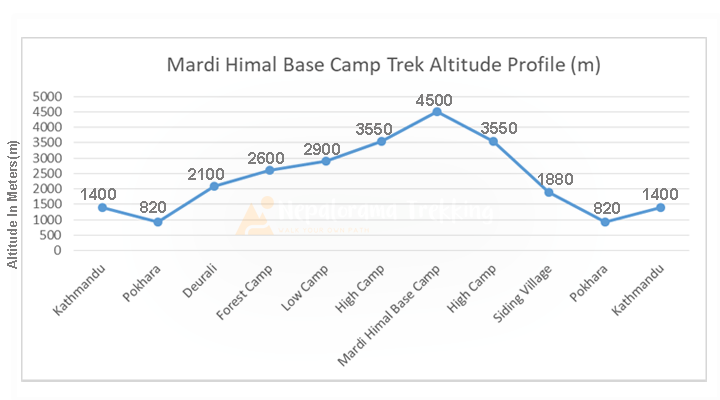
- Start Point (Kande): 1,770m
- High Camp: 3,550m
- Mardi Himal Base Camp: 4,500m
While the altitude is significant, the short ascent days and good rest points make it manageable without a high risk of altitude sickness.
Packing List for the Mardi Himal Base Camp Trek
The Essential Packing Lists are:
- Lightweight hiking boots (waterproof)
- Warm layers (fleece, down jacket)
- Rain gear (jacket & backpack cover)
- Hat, gloves, sunglasses, and sunscreen
- Trekking poles (helpful on descents)
- Water purification tablets or reusable bottles
- Basic first aid and personal medication
- Power bank, headlamp, and snacks
Document for booking Mardi Himal Trek
- Passport: A copy of valid passport with at least 6 months of validity remaining
- Flight Ticket: A Copy of your Flight Ticket
- Passport-Sized Photos: 2 passport-sized photos
- Travel Insurance: A copy of Travel and trekking insurance
- A copy of your visa is required to obtain the permits
How Much Does the Mardi Himal Trek Cost?
| Package Type | Group Trek (per person) | Private Trek (solo) | Private Trek (2 people) |
| Guide & Porter | $25–30/day | $45–50/day | $35–40/day per person |
| Accommodation | Included in package | Included | Included |
| Meals (3/day) | Included in package | Included | Included |
| Permits (ACAP + TIMS) | ~$40 total | ~$40 | ~$40 per person |
| Total (5–7 days) | $350–450 | $500–650 | $400–500 per person |
Note: Prices vary depending on season and services included.
Mardi Himal Base Camp Trek Tips for 2026 – 2027
- Start early to catch sunrise views from High Camp
- Book accommodation ahead of time during peak season
- Stay hydrated and take your time with altitude gain
- Power banks are essential – charging is not always available
- A torchlight is necessary if you want to go early in the morning for sunrise.
Mardi Himal Base Camp Trek Itinerary
For your Nepal tour, choose to follow this exact itinerary or ask us to customise your trip.
Arrival in Kathmandu
-
 Accomodation: 3 Star Hotel
 -
 Meals: Brekfast, welcome drinks
 -
 Elevation: 1400 m
Fly/Drive to Pokhara
-
Accomodation: 3 Star hotel
-
Meals: Breakfast
-
Elevation: 820 m
-
 Duration: 25 min flight or 6-7 hr drive
Drive to Kande & Trek to Deurali
-
Accomodation: Teahouse
-
Meals: Breakfast, Lunch, Dinner
-
Elevation: 2,100 m
-
Duration: 1 hr drive, 6 hr trek
Trek Deurali – Forest Camp – Rest Camp – Low Camp
-
Accomodation: Teahouse
-
Meals: Breakfast, Lunch, Dinner
-
Elevation: 2900 m
-
Duration: 4-5 hr
Trek Low Camp – High Camp
-
Accomodation: Teahouse
-
Meals: Breakfast, Lunch, Dinner
-
Elevation: 3550 m
-
Duration: 4-5 hr
Hike to Mardi Himal Base Camp Trek & Return to High Camp (3,550m)
-
Accomodation: Teahouse
-
Meals: Breakfast, Lunch, Dinner
-
Elevation: 4500 m
-
Duration: 6-7 hr
Trek to Siding Village (1,880m) – Drive to Pokhara
-
Accomodation: 3 Star Hotel
-
Meals: Breakfast, Lunch
-
Elevation: 930 m
-
Duration: 6 hr trek, 2 hr drive
Return to Kathmandu
-
Accomodation: 3 Star hotel
-
Meals: Breakfast, farewell Dinner
-
Elevation: 1400 m
-
Duration: 25 min flight, 6-7 hr drive
-
 Distance: 201 km
Departure Day
-
Meals: Breakfast



Feedback Session:
After you complete the Mardi Himal Trek, we will host a farewell dinner in Kathmandu to celebrate your successful journey. During the dinner, we will also present you with a trekking certificate as a memory of your adventure. We kindly request you to share your feedback about our services, including your experience with our guide and porter. Your review is very valuable to us and helps us improve our services and provide the best possible experience for future trekkers.
Mardi Himal Base Camp Trek offline Map and Route Overview

The Mardi Himal trail begins from Kande, passing through Australian Camp, Deurali, Forest Camp, Low Camp, High Camp, and finally reaching Mardi Himal Base Camp. The descent follows a different route through Siding Village, providing a loop experience.
Key Stops on the Route:
- Kande to Deurali: Forests and ridge views
- Forest Camp to Low Camp: Rhododendron woods and wildlife
- High Camp to Base Camp: Alpine terrain and jaw-dropping views
Map tip: Use a GPX trekking app like Maps.me or AllTrails with the Mardi Himal loop downloaded for offline access.
Mardi Himal Trek vs Annapurna Base Camp Trek
Choosing between the Mardi Himal Trek and Annapurna Base Camp Trek depends on your time, fitness, budget, and trekking preferences. Mardi Himal is a shorter and quieter Himalayan trek, while Annapurna Base Camp offers a classic longer trekking experience.
Mardi Himal Trek is perfect for travelers looking for stunning views of Machhapuchhre (Fishtail), Annapurna South and the Himalayan range in a short itinerary. The trail passes through beautiful forests, traditional villages and scenic mountain ridges.
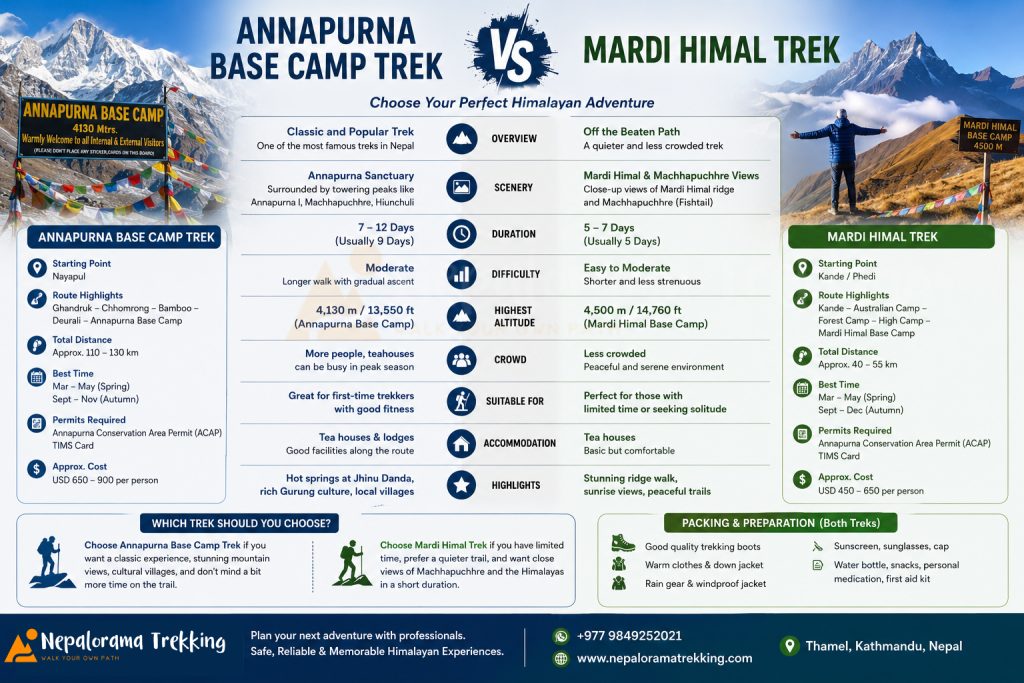
Annapurna Base Camp Trek takes you deep into the Annapurna Sanctuary, with diverse landscapes, mountain villages and spectacular views from Annapurna Base Camp at 4,130 m.
Which Trek Should You Choose?
- Choose Mardi Himal for a shorter, peaceful and scenic Himalayan adventure.
- Choose Annapurna Base Camp for a longer classic trekking experience.
- Both treks offer beautiful mountain views, teahouse accommodation and unforgettable Himalayan experiences.
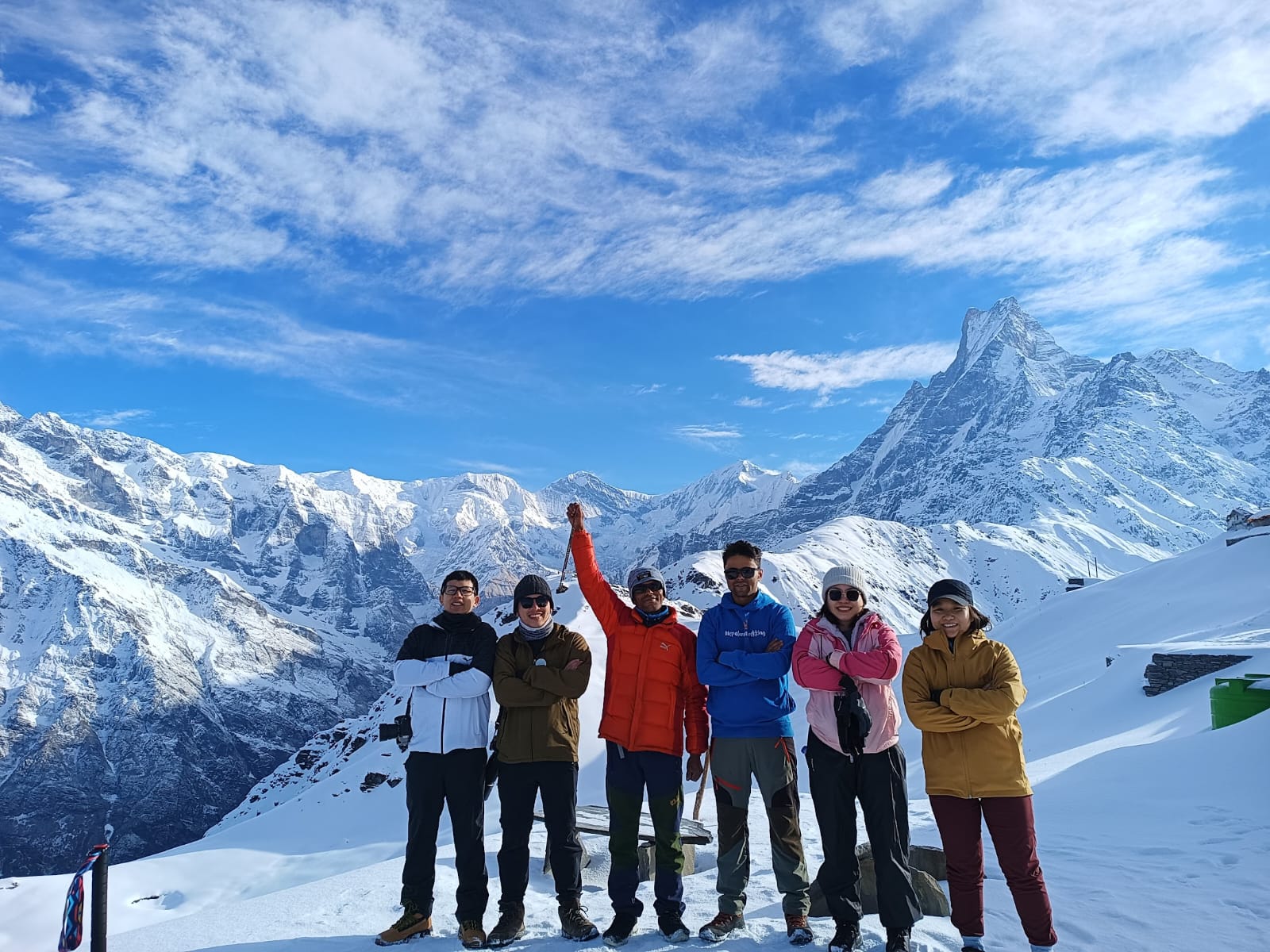
Mardi Himal Trek Gallery
What's Included
- Transfers from and to Kathmandu International Airport
- Tourist bus from Kathmandu to Pokhara and Pokhara to Kathmandu (optional for an extra cost: return domestic flights)
- Excellent 3* hotel shared accommodation (twin or triple share) in Pokhara and Kathmandu with breakfast (optional for an extra cost: choose to stay in a mid-range or luxury city hotel)
- Private ground transport to and from the trek
- Shared accommodation in teahouses (usually 2 people per room) during the trek
- All meals during the trek – choose a standard option from the menu at breakfast, lunch and dinner, each served with a cup of tea or coffee
- Experienced and friendly English-speaking Guide; their salary, accommodation, meals and insurance
- Porter (1 between 2 people, to carry a maximum of 12kg per trekker); their salary, accommodation, meals and insurance (optional for an extra cost: 1 porter per person, maximum 24kg load)
- Trekking permits
- Celebration meal in a great local restaurant (with a cup of tea or coffee)
- All government taxes
- Trek route map and completion certificate
What's not Included
- Meals not specified in the ‘INCLUDED’ costs above
- Additional tea, coffee, all mineral water (we recommend water purification tablets), and bar bills (coke, juice, beer, etc.)
- International airfare
- Travel insurance
- Nepal entry visa fees
- Tips for guides and porters
- Sightseeing costs (transport, attraction entry fees and cultural tour guide)
- Credit card fees and bank charges (no charge if cash paid in a major currency
FAQ for Mardi Himal Trek
Is the Mardi Himal Base Camp Trek suitable for beginners?
It’s achievable for fit beginners with no altitude issues, but prior hiking experience is advantageous. The ascent to Base Camp (Day 5) is strenuous. Good cardiovascular fitness and leg strength are essential. Consider shorter practice hikes beforehand.
How high is Mardi Himal Base Camp, and is altitude sickness a risk?
Mardi Base Camp sits at 4,500m (14,764ft). Altitude sickness (AMS) is a potential risk at this height. The trekking itinerary includes acclimatization days (gradual ascent, nights at Deurali, Low Camp, High Camp). Go slow (“pole pole”), stay hydrated, listen to your body and guide, and descend if symptoms worsen. Preventative medication (like Diamox) can be discussed with your doctor.
What is the accommodation like? Do I need to book in advance?
Accommodation is in basic mountain tea houses. Expect simple twin-share rooms, often with shared outside toilets and cold showers (hot showers may be available at extra cost at lower elevations). During peak seasons (Spring/Autumn), booking through your trekking agency is wise, especially for High Camp which has limited lodges.
What kind of food is available on the trek?
Teahouses offer a limited menu focusing on hearty, carb-rich meals: Dal Bhat (rice, lentils, veg curry – unlimited refills!), noodles (thukpa, chowmein), pasta, soups, momos (dumplings), rice pudding, pancakes, porridge, and basic snacks (chocolate bars, biscuits). Vegetarian options are common. Meat is less reliable at higher altitudes. Bring some favorite snacks from home.
Can I do this trek independently (without a guide/porter)?
Technically yes, the trek route is generally clear. However, it’s strongly discouraged for safety reasons (altitude, weather changes, navigation, potential for getting lost on descent routes). A registered guide enhances safety, provides cultural insights, handles permits/teahouse bookings, and supports the local economy. Porters significantly improve comfort and enjoyment.
How cold does it get? What should I pack?
Temperatures vary drastically. Days can be warm (15-20°C / 59-68°F) at lower elevations, while nights at High Camp/Base Camp can drop well below freezing, especially outside Spring/Autumn. Essential: Layered clothing system (moisture-wicking base, insulating mid-layer like fleece, warm down jacket, waterproof/windproof shell), warm hat, gloves, thermal underwear, warm sleeping bag (rated at least -10°C / 14°F). Don’t forget sun protection (high SPF, lip balm, sunglasses)!
Is there WiFi or mobile network on the trek?
Mobile network (NTC or Ncell) is available intermittently at lower elevations (Deurali, sometimes Low Camp). It becomes very unreliable or non-existent at High Camp and Base Camp. Some teahouses offer paid WiFi, but it’s often slow and expensive. Embrace the digital detox! Consider buying a local SIM in Kathmandu/Pokhara for potential coverage lower down.
How much cash should I bring?
Bring sufficient Nepali Rupees (NPR). Costs cover bottled water (purify your own to save money/plastic!), hot drinks, snacks, desserts, battery charging (often per hour/device), hot showers (where available), and any souvenirs. Budget approx. 3000-5000 NPR per person per day on the mountain (excluding main meals if on full board with agency). Have extra for tips for guides/porters and Pokhara/Kathmandu expenses. The Mardi Himal Trek cost can vary depending on your trekking style and inclusions.
What types of Cultural experiences are in the Mardi Himal ?
The Mardi Himal Trek offers a perfect blend of culture and nature. Along the way, you will travel through villages like Kande, Pitam Deurali, and Siding, all of which are inhabited by Gurung and Magar families. You will be able to see people in their daily lives, eat the local food, and listen to some folk songs. The houses are colorful, and the people are friendly. You will experience the traditional ways of farming also. Much of what you will experience as far as lodging will be teahouses run by local families, enabling even better opportunities to converse and interact. Along the trail, you may see some little monasteries, prayer flags and stone carvings that represent the area’s strong Buddhist and Hindu culture. The experience of culture alongside the Mountain views makes the Mardi Himal Trek a unique experience.
How does Mardi Himal Trek compare to the Annapurna Base Camp (ABC) Trek?
The Mardi Himal Trek is shorter and quieter than the Annapurna Base Camp (ABC) Trek. It takes about 5 to 7 days and has fewer trekkers, making it peaceful. The ABC Trek is longer, about 7 to 12 days, and more crowded, especially in peak season. Both treks have beautiful mountain views. Mardi Himal gives close views of Machhapuchhre (Fishtail), while ABC takes you deep into the Annapurna Sanctuary. If you want a short and less crowded trek with great scenery, Mardi Himal is a good option.
Is the Mardi Himal Trek easier than the Everest Base Camp (EBC) Trek?
Yes, the Mardi Himal Trek is easier than the Everest Base Camp (EBC) Trek. Mardi Himal is a moderate trek with a maximum altitude of about 4,500 meters and takes around 5 to 7 days to complete. In comparison, EBC reaches up to 5,364 meters and usually takes 12 to 14 days, making it more challenging. The EBC trek also requires a flight to Lukla and has a higher risk of altitude sickness. Mardi Himal is more beginner-friendly and a better choice for those who have limited time but still want beautiful mountain views.
Which is better for short treks: Mardi Himal or Poon Hill?
Poon Hill is better for a very short and easy trek. It takes about 3 to 4 days and is known for its beautiful sunrise views over the Himalayas and rich local culture. The trail is easier and more comfortable, with well-developed teahouses. On the other hand, Mardi Himal is a bit longer, taking 5 to 7 days, and reaches higher altitudes. It offers dramatic mountain scenery, including close views of Machhapuchhre, and has a quieter, less crowded trail. Choose Poon Hill if you want an easy cultural trek, and choose Mardi Himal if you prefer more adventure and stunning mountain views.
Which trek offers the best mountain views in a short time?
The Mardi Himal Trek offers some of the best mountain views in a short amount of time. In just 5 to 7 days, you can enjoy close-up views of Machhapuchhre (Fishtail), Annapurna South, and Hiunchuli. The trail takes you high above the tree line, giving you stunning panoramic views without needing a long or difficult trek. For trekkers looking for quick but unforgettable mountain scenery, Mardi Himal is an excellent choice.
Which is the least crowded trek in Nepal?
Mardi Himal Trek is much quieter compared to the Annapurna Base Camp (ABC) and Everest Base Camp (EBC) treks. While ABC and EBC are very popular and often crowded, especially during peak seasons, Mardi Himal offers peaceful trails with fewer trekkers. If you prefer a calm and more private trekking experience away from the crowds, Mardi Himal is an excellent choice.
How to Download the Mardi Himal Trek Day-to-Day Offline Map and Itinerary?
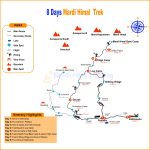
To download the Mardi Himal offline map, you can use mobile apps like Maps.me, AllTrails, or Gaia GPS, which are popular among trekkers. First, install one of these apps from the Play Store or App Store. Once installed, open the app and search for “Mardi Himal” or the nearby region like “Pokhara” or “Annapurna Region.” After locating the map, look for the download or offline maps option. Make sure you have an internet connection during this step. Tap the download button and wait for the map to be saved to your device. Once downloaded, the map will be accessible without internet access, making it useful during your trek in remote areas. It is also recommended to download elevation profiles, trail routes, and key waypoints for better navigation. Always ensure your phone is fully charged or carry a power bank, as using maps can consume battery quickly during the trek.
Association


